
Joanna Rajkowska: Night Herons (2020–2021)
In this edition of WINDOW, we present Night Herons (2020–2021), an eleven-chapter puppet film by Joanna Rajkowska & Robert Yerachmiel Sniderman. Moving between Poland and the United States, the film traces how the trauma of the Holocaust reverberates across generations.
On view: 14 November – 15 December
Night Herons is a masterfully made puppet film that unfolds in eleven chapters and is presented as several interconnected short films about transgenerational trauma, survival, and letting go. It starts and ends in the Polish swamps and forests (the film is also dedicated to all forest animals): we follow Sara’s journey from Warsaw to America during the Second World War. She carries garlic for protection, and she seems to understand her surroundings: the forest helps her. This is even more true in the next story, which is also set in 1944, during the war. A 7-year-old boy, Dzidek, is hiding in the swamps with his mother. They escaped the train, which was taking them to Auschwitz. The narrator says they stayed there for several days, ate roots, and became almost one with the wetlands. As in many partisan stories or escape narratives from the Maroon communities of runaway slaves in the Americas, the forest and the swamp appear as a site of protection and a chance for survival. Yet the night herons, symbols of transition, escorting the dead to the afterlife, loom over the landscape, foreshadowing the fate of thousands of Polish families.
In the following episodes, other characters’ lives emerge alongside the above-mentioned: the descendants of Sara and Dzidek and their friends and acquaintances, between Poland and America, from the ’60s to the 2010’s. We move away a bit from the lushness of the forest, and the trope of hunting and dead animals comes to the fore in Polish socialist block apartments: the carcasses could be read as symbols of the traumas of the war and the aftermath of it – how it affected everyone who survived. The act of hunting, the animal’s death and the bloody, rotting bodies could be read as a parallel with what Dzidek survived, and how it becomes crucial for him to find some way out of his depression and addiction. More fragmentary, riddled scenes from a small American mining town, along with hidden documents, appear throughout, while the Polish storyline stays the main focus. The fact that we see a puppet film, traditionally associated with children’s genres, also creates a certain kind of tension: in several scenes, its mechanism and structure echo the vulnerability of the characters, for example in the episode where Rajka is washing the body of Dzidek’s old hunting guide, and the bare forms of the puppet appear.
The same forest site returns at the end of the film, when the characters Rajka (Dzidek’s granddaughter) and Robert (also a Jewish descendant of a man who migrated to the States) (and alter egos of the artists) engage in some sort of ritual. Their return to the forest seems transformative and healing at the same time: coming to terms with their familys’ past, their Jewish heritage, and their history, and making space for something new to come. They consume what looks like a hallucinogenic root and they “walk backwards” and “call the demons”, revisiting stories of the past, trying to understand what happened with their families and how it still affects them. What seems like both a burial of the dead animals we’ve seen before in the apartment and a ritual of cleaning and healing wounds (both literal and metaphorical) slowly transforms into a “danse macabre”. The night herons appear again with skeletal figures dancing in the night. Ghost of the past or our protagonists’ shadow side? We may never know.
Credits
Directed by: Joanna Rajkowska
Written by: Robert Yerachmiel Sniderman, Joanna Rajkowska
Director of Photography: Leszek Molski
Edited by: Marcelina Górka
Voiceover: Matthew Daniel
Music by: Mutant Goat (Ola Kozioł, Andrew Dixon, Suavas Lewy)
Sound design and mix: Franciszek Kozłowski
Marionettists: Andrew Dixon, Basia Ciacek, Joanna Rajkowska, Viktoriia Tofan
Marionettes created by: Joanna Rajkowska, Lili Bargłowska, Basia Ciacek, Andrew Dixon, Viktoriia Tofan
Animals created by: Viktoriia Tofan, Lili Bargłowska, Joanna Rajkowska
Sets: Andrew Dixon, Basia Ciacek, Viktoriia Tofan
Costumes: Wiesława Rozwonkowska, Konrad Pietruszyński
Props: Lili Bargłowska, Joanna Rajkowska, Konrad Pietruszyński, Rosa Dixon
Pottery: Danuta Jarecka
Colorist: Marcelina Górka
Visual effects by: Marcelina Górka
Marionette design consultant: Basia Poczwardowska
Production manager: Joanna Rajkowska
Production support: filmujemy.org
Publicity photography: Marek Szczepański
Executive producers: Agnieszka Sobocińska, PADO Studio Film – Dorota Przyłubska
Commissioned and produced by steirischer herbst ’20
Source texts: Magicians, Theologians, and Doctors: Studies in Folk Medicine and Folklore as Reflected in the Rabbinical Response by H. Jacob Zimmels (Goldston, 1952), The Ethics by Benedict de Spinoza translated by Edwin Curley (Princeton, 1994)
Thanks to Theodore Block, Andrzej Rajkowski, Mariusz Widliński, Dori Midnight, Gunila Plank and her mother, Adrian Shirk, Katarzyna Górska, Andreas Staudinger, Uli Vonbank-Schedler, Arnold Rack, and Christian Berg for sharing knowledge, time and memory.
Joanna Rajkowska and Robert Yerachmiel Sniderman ©2020
Filmed in Nowogród

Gadó Flóra
Flóra Gadó is an independent curator, art critic and researcher based between Brussels and Budapest. Between 2018 and 2025, she worked as a curator at the municipal contemporary art center, Budapest Gallery, and has curated various exhibitions, for example, at Kunsthalle Exnergase (Vienna), MeetFactory (Prague), and Trafó Gallery (Budapest). She holds a PhD in Film, Media, and Cultural Studies from Eötvös Loránd University, Budapest and graduated from the MA Curatorial Practice Program at the University of Bergen, Norway. Her curatorial residencies include Firestation Artists Studios (Dublin), MeetFactory (Prague), KAI (Tallinn), Mondriaan Fonds (Amsterdam) and Frame Finland (Helsinki).
You may also like
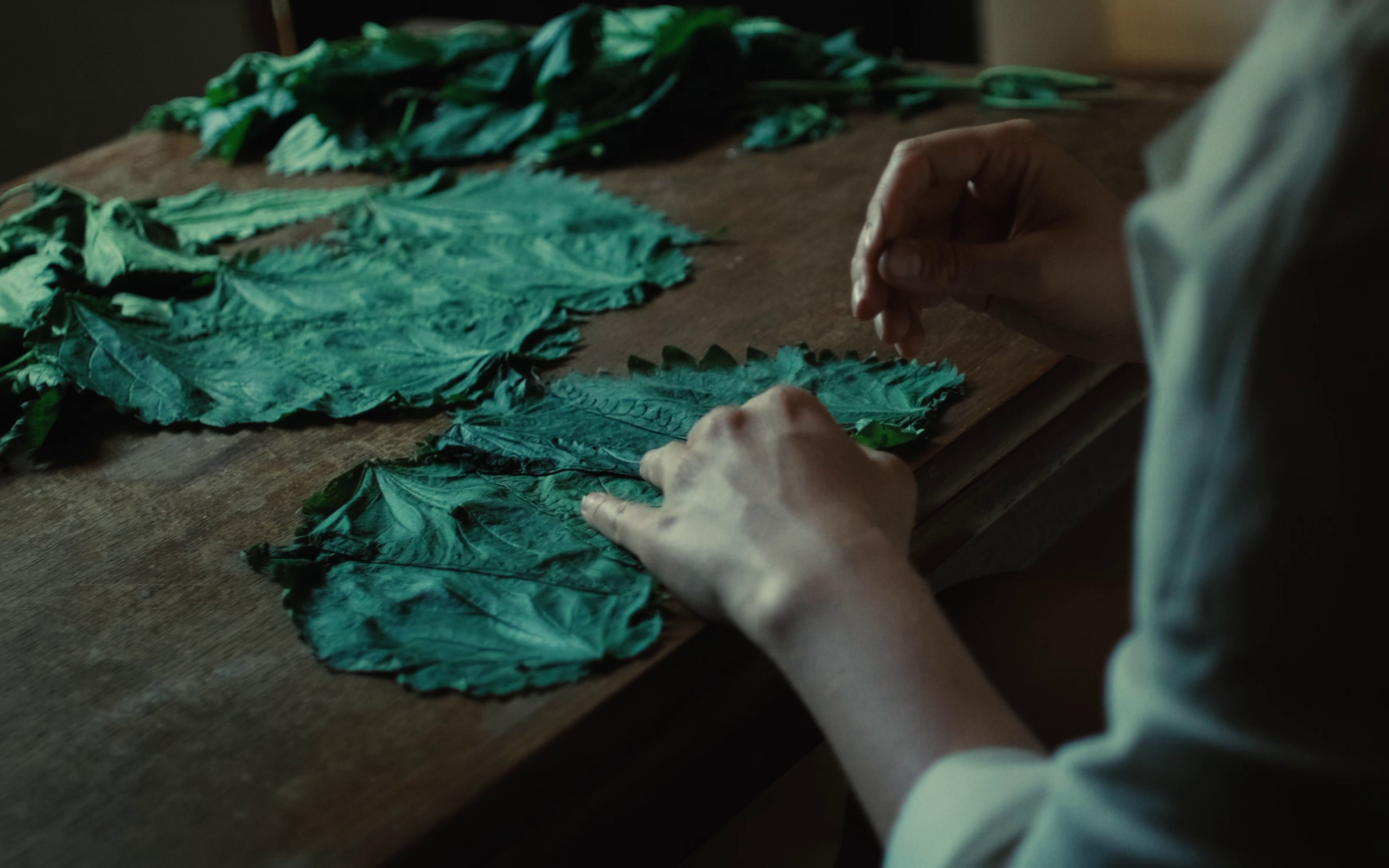
Anna Zilahi: Urtica
The third film in WINDOW’s inaugural edition is Anna Zilahi’s moving-image work Urtica (2022).

Residency Program at A4 in Bratislava
A4 – space for Contemporary Culture in Bratislava announces a residency program for artists from t

PAULA MALINOWSKA: How Did Daphne Turn Into a Plant (2022)
The fourth chapter of the WINDOW series presents Paula Malinowska’s 3D animated film How Did Daphn