
PAULA MALINOWSKA: How Did Daphne Turn Into a Plant (2022)
The fourth chapter of the WINDOW series presents Paula Malinowska’s 3D animated film How Did Daphne Turn Into a Plant (Our feet, just now so swift, hold fast in resistant roots) (2022). The film retells Daphne’s transformation from a plant’s perspective, exploring bodily autonomy, vulnerability, and the possibility of finding strength and freedom in another form of life.
On view: 4 October – 1 November
The next episode of the WINDOW series continues to explore our entanglement with nature: what we can learn from it, how turning towards it can sustain us, and how we might become one with it. While Anna Zilahi’s video approached the nettle as a “pharmakon” that strengthens the protagonist of Andersen’s fairy tale, in Paula Malinowska’s film the main character literally transforms into a plant. Like Zilahi, the Slovak artist takes a familiar story as her starting point, this time from Greek mythology. The myth has inspired numerous artists over the centuries; my personal favourite is Piero del Pollaiuolo’s painting from around 1470–1480. It tells the story of Daphne, who, fleeing Apollo’s unwanted sexual advances, prayed to her father, a river god, asking him to transform her into a laurel tree.
Malinowska, however, is interested not only in the metamorphosis recounted by Ovid, but also in exploring the plant’s perspective and how it intertwines with Daphne’s. Rather than illustrating the transformation didactically, the artist evokes a way of seeing that resembles looking through a microscope—or perhaps seeing from the plant’s own point of view. The imagery is visceral and tactile, alternating between close-ups and wide shots, while the animation’s sophisticated digital techniques create an intriguing contrast with its organic subject matter. Roots and networks of underground life give way to vivid green and brown leaves, buds and flower-like forms. Yet these are far removed from botanical illustrations: they seem almost imaginary. Only towards the end do we see Daphne: first her eyes, with the plant reflected in them, then her face and torso. She appears before us as both vulnerable and resistant.
As the artist suggests, Daphne’s story can be read as one of the earliest literary accounts of sexual violence. “How to view the mythology of the transformation of the body into a plant in a contemporary context framed by rape culture and the constant attempts of politicians to control bodily autonomy?” asks Malinowska. Although Daphne’s face remains visible, the video’s emphasis falls on the plant slowly enveloping her. This process can be read through Deleuze and Guattari’s concept of becoming in A Thousand Plateaus: Daphne is becoming-plant. Her transformation opens up the possibility of resilience and strength through a new form of life. The conflict unfolds between humans, as a woman seeks to escape a man’s violence, while the plant offers a different mode of existence. Becoming a plant thus emerges as more than a refuge or a romanticised escape: metaphorically, it suggests a lasting strategy for survival. The pulsating tension of the music reinforces this reading, as does the philosophical voice-over, which speaks of “expanding boundaries” and “multiplying fixed categories” and echoes the film’s title: Our feet, just now so swift, hold fast in resistant roots.
Credits:
soundscape: Andrej Žabkay
video editing: Vladimíra Vrbiňáková
voice-over: NaiKavols
Paula Malinowska: How Did Daphne Turn Into a Plant (Our feet, just now so swift, hold fast in resistant roots), 2022. 3D animated short film, 12:35 min.
This project was supported using public funding by Slovak Arts Council.

Gadó Flóra
Flóra Gadó is an independent curator, art critic and researcher based between Brussels and Budapest. Between 2018 and 2025, she worked as a curator at the municipal contemporary art center, Budapest Gallery, and has curated various exhibitions, for example, at Kunsthalle Exnergase (Vienna), MeetFactory (Prague), and Trafó Gallery (Budapest). She holds a PhD in Film, Media, and Cultural Studies from Eötvös Loránd University, Budapest and graduated from the MA Curatorial Practice Program at the University of Bergen, Norway. Her curatorial residencies include Firestation Artists Studios (Dublin), MeetFactory (Prague), KAI (Tallinn), Mondriaan Fonds (Amsterdam) and Frame Finland (Helsinki).
You may also like

Courtisane 2026 — a subjective review of the festival
In April 2026, the 25th edition of the Courtisane Festival took place in Ghent, presenting a diverse

The Fragile Layers of Our Identity
Kontur Magazine's February Exhibition Recommendation.
Anna Zilahi: Urtica
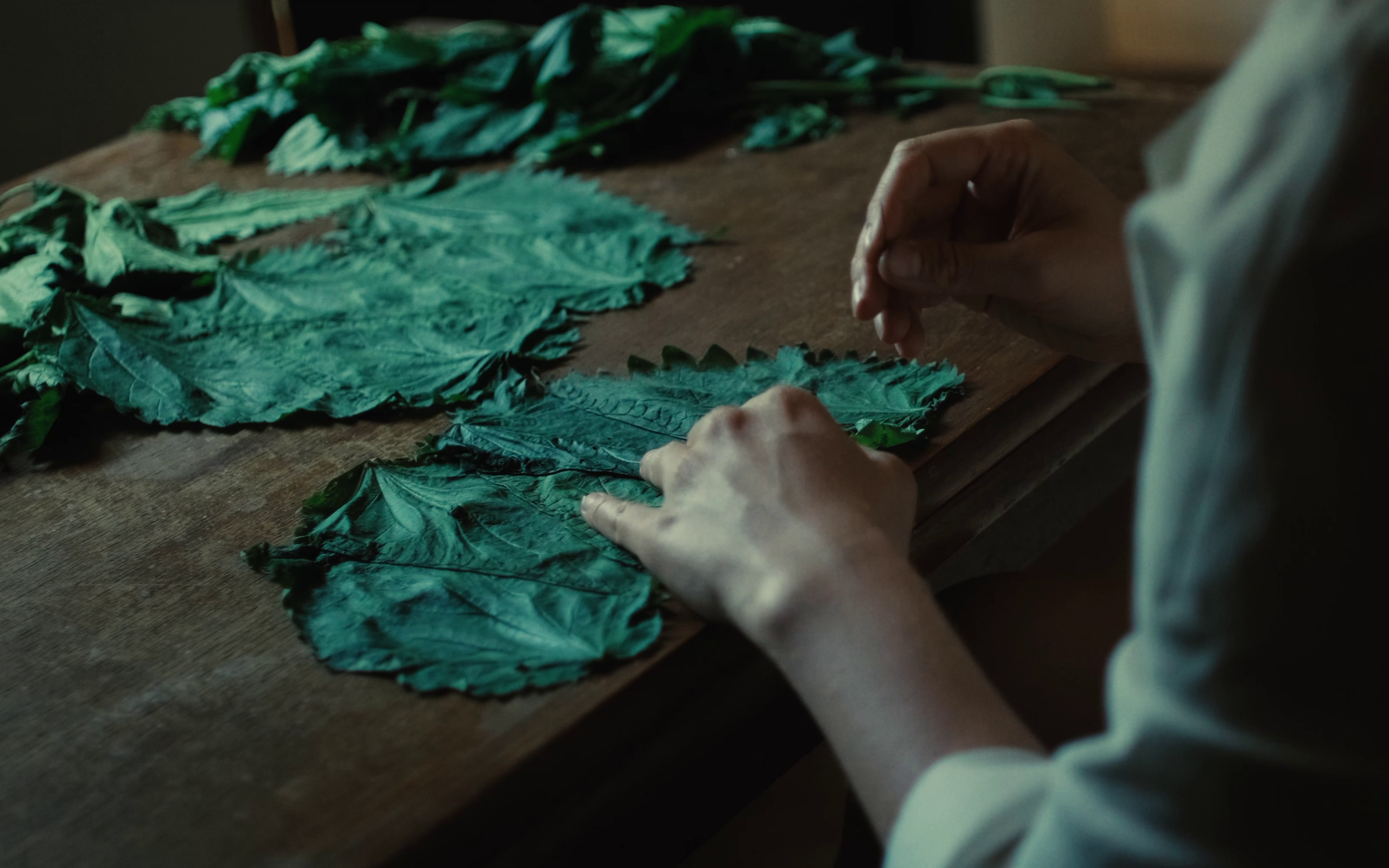
The third film in WINDOW’s inaugural edition is Anna Zilahi’s moving-image work Urtica (2022).